About Chianti vineyards
Chianti vineyards are those long stripes of vines you see between Florence and Siena, wrapped around old farmhouses and tiny stone villages. On maps they look tidy, but up close every slope, row and corner feels a bit different, and that is where the region really starts to make sense.
This page is for people who want to walk between the rows, not just see them from a bus window. How Chianti vineyards are planted in Tuscany, what they look like in spring, harvest and winter, what actually happens on a vineyard visit from Florence, and how to pick experiences that feel real instead of staged just for photos.
What Chianti vineyards really are
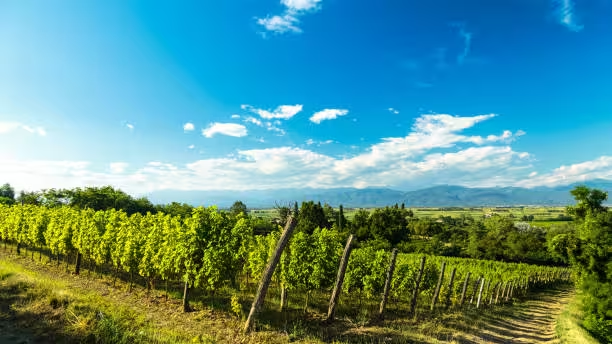
When people say Chianti they often picture one famous label, but the vineyards themselves are a patchwork of small parcels running across the hills of Tuscany between Florence and Siena. Long rows of mostly Sangiovese vines, sometimes with other grapes mixed in, trained low to the ground so they catch sun and air without burning in the summer heat.
Some vineyards sit on soft slopes with deep soils and wider rows, others cling to rocky terraces where tractors barely fit and yields stay low. A few are postcard perfect, many are just quiet working fields with nets, posts, wild flowers and the odd broken stake here and there. Getting close to the vines is how you feel the difference between one bottle and the next, not just read it on the label.
Quick information about Chianti vineyards
- Main grape: Sangiovese still rules the rows, often with small amounts of varieties like Canaiolo, Colorino or international grapes blended in the same vineyard.
- Row direction: many vineyards follow the slope from top to bottom for drainage, others run across the hill to slow erosion, so lines look different valley by valley.
- Best moments to see them: late April to June for fresh green leaves, September - October for heavy clusters and harvest activity, winter if you like bare vines and quiet hills.
- Access: most vineyards are private land, so you normally visit them as part of a winery tour or with a guide, not by just parking and walking in on your own.
- Walking surface: expect dirt, stones, tractor ruts and sometimes mud after rain, this is farm land first and a backdrop for photos second.
- Weather: there is little shade in the rows, so hats, water and sunscreen matter more than people think, especially in July and August.
How vineyard visits from Florence usually work
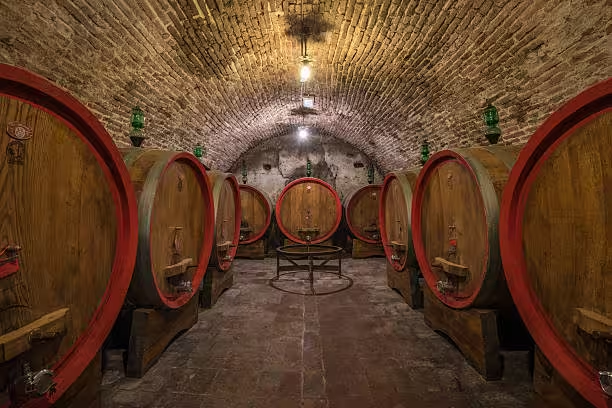
Most people see Chianti vineyards as part of a small group tour, a private driver day, or a visit they booked directly with a winery. You arrive at the estate, meet a host, walk through part of the vineyards while they explain the grapes and soils, then head into the cellar and finally sit down for a tasting. It sounds simple, but the way each stop is paced changes how the whole visit feels.
You almost never just wander into a random vineyard, that is like walking into someones garden uninvited. If you want quiet time between the rows, tell the company when you book that this matters to you. Some places are set up for quick photos and straight into the shop, others are happy to let you stroll slowly and ask basic questions about pruning, harvest and how the vines cope with hot summers in Tuscany.
Things you notice when you walk Chianti vineyards
How vineyards change through the year
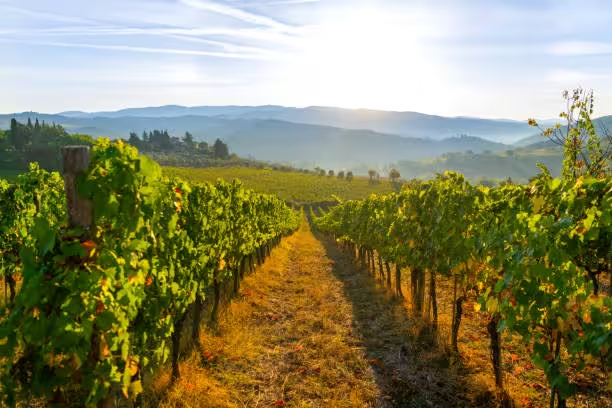
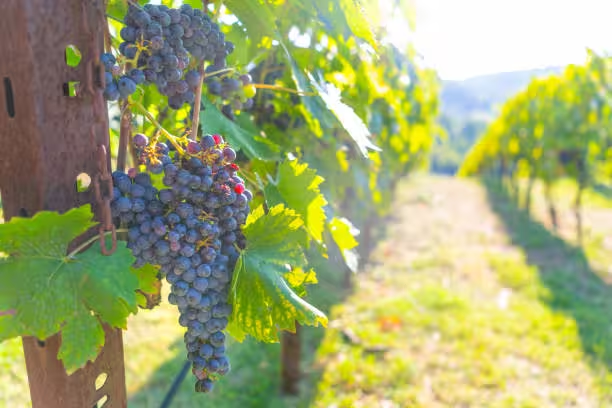
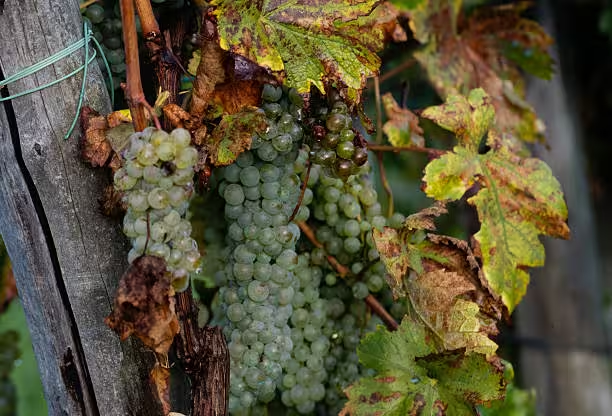
In early spring Chianti vineyards look almost naked, just rows of pruned wood and pale soil. By June they are bright and leafy, in September heavy with grapes and a bit messy around the edges, then back to bare canes again by winter. Seeing even one row in two different seasons tells you more about Tuscany than a whole stack of glossy brochures.
What the grapes tell you up close
From far away every row looks the same, but when you stand in the vineyard you see small things - how tight or loose the clusters are, which side of the plant gets more sun, how leaves shade the grapes. Even if you are not a wine nerd, spotting these details while someone explains them makes the glass in your hand feel less like a random drink and more like the end of a long year of work.
Why the ground under your feet matters
Some parts of Chianti have soft clay and deep soil, others are full of stones that rattle under your shoes. On steeper, rockier slopes vines have to work harder, roots go deeper, and yields are lower. Guides talk about this a lot because it changes how the wines taste, but you feel it instantly just by walking a few meters between different blocks of vines.
How light changes the same vineyard
Midday sun flattens everything a bit, but in the first hour after breakfast and the last hour before sunset vineyards suddenly look three dimensional. Leaves glow, rows cast long shadows, and you notice small curves in the land that were invisible at noon. If photos matter to you, this is when you want to be out between the vines, not stuck on the highway back to Florence.
The small sounds that stay with you
Vines do not make noise, but vineyards are never really silent. You hear tractors far away, tools knocking against posts, bits of conversation drifting up from the cellar, insects, wind in the leaves. It is a calm kind of background noise that lets your brain slow down a bit after busy streets in Florence, and people remember that feeling long after they forget the exact tasting notes.
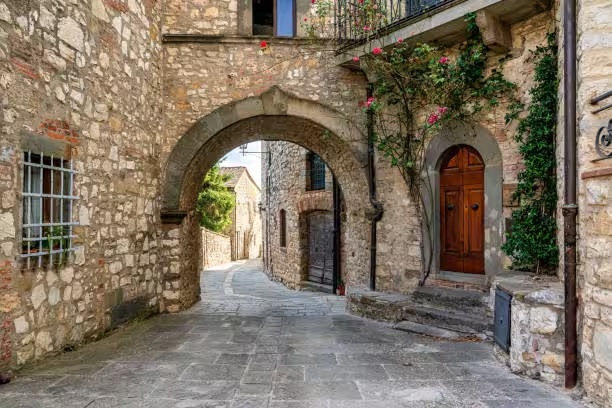
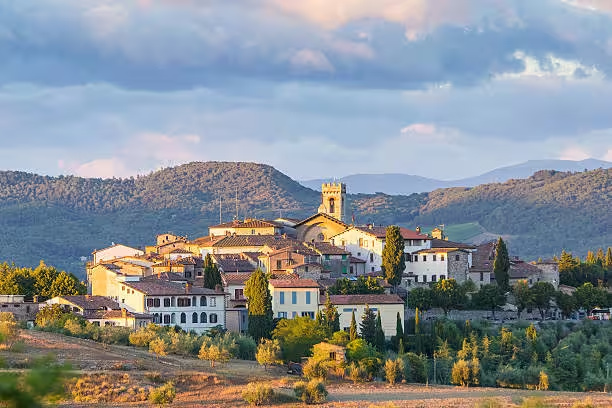
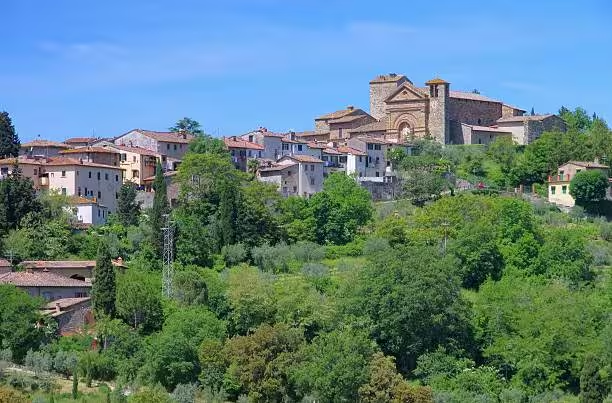
Different vineyard landscapes inside Chianti
What to look for on a first vineyard visit
On your first proper visit to Chianti vineyards it helps to focus on a few simple things instead of trying to learn everything about wine in one afternoon. Pay attention to the shape of the land, how the vines are trained, what the soil looks like when you scrape it with your shoe, and how far the cellar is from the closest rows.
- Notice how the rows follow the slope or cut across it, and where water would run on a rainy day.
- Look at the ground between vines - stones, grass, bare earth - it all tells you how the vineyard is managed.
- Ask to see at least one older block of vines and one younger planting so you can compare trunk size and spacing.
- When you taste, try to imagine which part of the vineyard the wine might have come from instead of only listening to flavor notes.
Tips for visiting Chianti vineyards
- Dress for a field, not a lounge: vineyards are working farms with dust, mud and uneven ground, so closed shoes and clothes you are not precious about will make your day easier.
- Respect the rows: vines are someones income, so avoid stepping on roots, hanging bags on posts or picking grapes without being invited to, it seems small but it matters.
- Ask before you wander off: if you want photos deeper in the vineyard, check with your host where you can safely walk, especially during harvest when tractors and workers are moving fast.
- Think about sun and shade: there is rarely much cover between the rows, so sunglasses, a hat and water can be the difference between a relaxed stroll and a slightly cranky march.
- Listen as much as you look: the most interesting vineyard visits are usually the ones where you let growers talk, even if their English is not perfect, they know every row like a family member.
- Keep tastings manageable: two good estate visits with time in the vines often beats four rushed stops where you barely remember which wine came from which hillside.
10 questions about visiting Chianti vineyards
1. Do I need a reservation to visit Chianti vineyards?
In almost every case, yes. Chianti vineyards are private property and most estates only accept visitors with a booking, either through a tour company or directly. Turning up at a random gate without notice usually ends in an awkward conversation, not a spontaneous tasting.
2. Can I walk between the vines during harvest?
During harvest vineyards are busy workplaces with tractors, bins and people carrying heavy crates. Many estates still let you walk a short marked stretch with a guide, but they will not want visitors wandering freely between rows while fruit is being picked. Follow directions, it is about safety as much as respect.
3. What should I wear for a vineyard walk in Tuscany?
Closed shoes with a bit of grip, clothes you can get dusty in, and a light layer for cellars or breezy hillsides. Fashion photos in sandals and long dresses look great online, but in real life you will be stepping on stones, dirt and uneven ground most of the time.
4. Are Chianti vineyards suitable for children?
Yes, as long as you pick estates with space to walk, shade and maybe animals or a small play area. Kids usually enjoy running along the edge of the rows or spotting tractors more than sitting through long technical tastings. Bring water, snacks and a hat, there is a lot of sun and not many railings.
5. Can I pick grapes or touch the vines?
Only if your guide or host says it is ok. One or two grapes for a photo or to taste is usually fine when they offer, but grabbing bunches on your own is bad form. Remember each cluster is part of the harvest that will end up in a tank or barrel later.
6. Are dogs allowed in Chianti vineyards?
Many rural estates are used to dogs, but policies differ. Some allow dogs on a leash in outdoor vineyard areas but not in cellars or tasting rooms, others prefer no pets at all. If you plan to bring a dog it is worth asking the winery directly before you book.
7. What is the best time of day to see the vineyards?
Early morning and late afternoon are the most comfortable and photogenic. Light is softer, temperatures are kinder, and you are not squinting into the sun while someone explains the vines. Midday can still work, especially in spring and fall, but in high summer it gets hot fast between the rows.
8. Can I use a tripod or drone in the vineyards?
Tripods are usually fine if you are not blocking paths or getting in the way of workers. Drones are more complicated - there are flight rules in Italy and many estates do not like buzzing over fields or houses. Always ask permission and accept a no, even if the view looks perfect from above.
9. What happens if it rains on the day of my vineyard visit?
Light rain usually means shorter or faster walks between the rows and more time in the cellar and tasting room. Heavy rain or storms can push vineyard parts of the tour indoors completely. The upside is that on wet days you often get quieter estates and more time to talk with the people who work there.
10. How long does a typical vineyard visit last?
If you visit a single estate, count on roughly 60 - 90 minutes for a vineyard walk, cellar tour and tasting. When vineyards are part of a longer Chianti day with several stops, each visit may be a bit shorter, so if you really care about time in the rows it is worth choosing tours that clearly highlight that.